






If you have spent any time reading about earthing or grounding, you have probably seen two very different reactions. Some people report real changes in sleep, stress, or pain. Others dismiss the whole idea as a placebo effect.
Both reactions are understandable. Earthing sits at the intersection of biology, physics, psychology, and personal experience. That makes it interesting, but also easy to misunderstand.
This article is not here to sell miracles or dismiss lived experiences. Instead, it aims to help you think more clearly about what might be happening when people report benefits from earthing and how to separate expectation effects from possible physiological mechanisms.

Why The Placebo Question Comes Up So Often With Earthing
Whenever a practice feels simple, natural, and low tech, skepticism follows. Standing barefoot on grass does not look like medicine. Plugging a mat into the ground port of a wall socket feels almost too basic to matter.
That makes earthing an easy target for the word placebo.
In science, a placebo does not mean fake or imagined. It refers to real changes that happen because of belief, expectation, context, or ritual rather than the specific physical mechanism being tested.
Understanding this distinction is important because placebo effects are real biological responses. They can influence pain perception, stress hormones, sleep quality, and even immune signaling.
So the real question is not “Is earthing a placebo?”
The better question is “How much of the reported effect could be expectation, and how much could be explained by known or plausible physiology?”

What A Placebo Effect Actually Is And What It Is Not
The placebo effect is often misunderstood as people tricking themselves. In reality, it is the brain responding to meaning and expectation.
When someone expects relief or calm, the nervous system can shift. Stress hormones may decrease. Muscle tension can drop. Pain perception can change. These responses are measurable and well-documented in medical research.
Important points to keep in mind:
- Placebo effects are not imaginary. They involve real physiological changes.
- Placebo responses vary widely between individuals.
- A placebo effect does not mean the underlying practice has no physical mechanism.
- Placebo and physiology can exist at the same time.
In other words, acknowledging placebo does not automatically invalidate a practice.

The Proposed Physiological Mechanisms Behind Earthing
Earthing proponents often focus on one central idea. The Earth carries a natural, stable electrical potential, and direct contact with it allows electrons to flow into the body.
The proposed effects include:
- Neutralization of excess positive charge or free radicals
- Changes in surface charge of red blood cells, potentially affecting blood flow
- Modulation of nervous system activity, especially stress responses
- Interaction with circadian and electrical signaling processes in the body
These ideas are still being explored. Some small studies and pilot experiments suggest measurable changes in inflammation markers, cortisol rhythms, or blood viscosity after grounding.
At the same time, the evidence base is limited, and many studies involve small sample sizes, short durations, or lack strong blinding.
This does not mean the physiology is impossible. It means it is not yet fully mapped or confirmed at a large scale.

Why Earthing Is Hard To Study Cleanly
From a research design perspective, earthing is surprisingly difficult to test.
Blinding is one major challenge. People often know whether they are grounded or not, especially when they are barefoot outdoors. That awareness alone can influence outcomes.
Lifestyle confounders are another issue. Many people practice earthing while also slowing down, going outside, breathing deeply, or stepping away from screens. Each of those factors can independently reduce stress or improve sleep.
There is also the novelty effect. Trying something new, especially something framed as healthy or natural, can temporarily boost attention to bodily sensations and well-being.
All of this makes it hard to isolate a single variable.
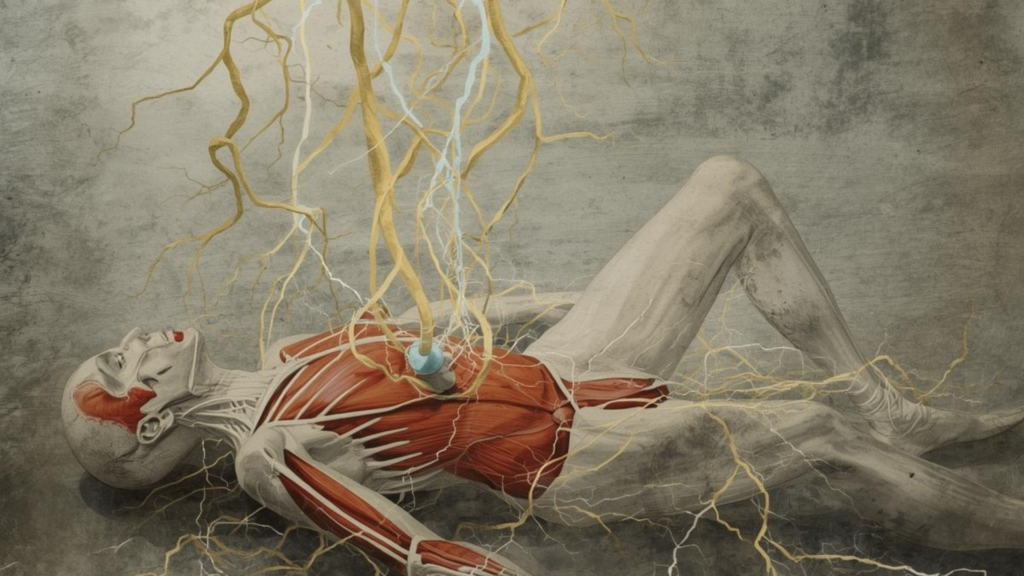
Can Placebo And Physiology Both Be True
Yes, and this is where the conversation often becomes more productive.
It is entirely possible that:
- Some benefits come from expectation and belief
- Some benefits come from relaxation and environmental change
- Some benefits come from real electrical or physiological interactions
- The mix is different for each person
For example, someone who grounds outdoors may benefit from sunlight, movement, reduced mental load, and social disconnection from devices. At the same time, there could be subtle electrical effects layered on top.
Science does not require a single explanation. Human biology is complex and multi-layered.

How To Think About Personal Earthing Results More Clearly
If you are experimenting with earthing yourself, it helps to take a grounded and honest approach.
Consider these questions:
- What exactly changed, and how quickly?
- Were there other lifestyle changes happening at the same time?
- Do the effects persist over weeks, not just days?
- Do the effects disappear when you stop grounding?
Short term improvements that fade quickly may lean more toward novelty or expectation. Changes that remain stable over time are more interesting from a physiological perspective, though they still are not proof.
Tracking sleep, stress levels, or pain consistently rather than relying on memory can also reduce bias.

Why Skepticism And Openness Both Matter
Blind belief is not helpful. Neither is automatic dismissal.
Healthy skepticism asks for evidence, recognizes limitations, and avoids overclaiming. Healthy openness allows room for emerging research and personal experience without turning them into universal truths.
Earthing does not need to be a miracle to be worth exploring. It also does not need to work for everyone to have some value.

A Balanced Way To Interpret Earthing Claims
If you take one thing away from this discussion, let it be this.
Placebo effects are part of human biology, not a failure of it. Physiology is complex, slow to study, and often subtle. Earthing sits in a space where both likely overlap.
The most honest interpretation today is cautious curiosity. Some people feel better when they ground themselves. There are plausible mechanisms being explored. The evidence is still evolving, and strong medical claims are not justified.
That middle ground may not be exciting, but it is where understanding usually grows.

Curiosity Beats Certainty
When it comes to earthing, the most useful mindset is not belief or disbelief, but curiosity.
Try it thoughtfully if you are interested. Pay attention without forcing conclusions. Stay informed about research as it develops. And remember that feeling better does not require a single explanation to be valid.
Sometimes the body responds to nature in ways science has not fully explained yet. Sometimes the mind plays a bigger role than we expect. Often, it is a little of both.