





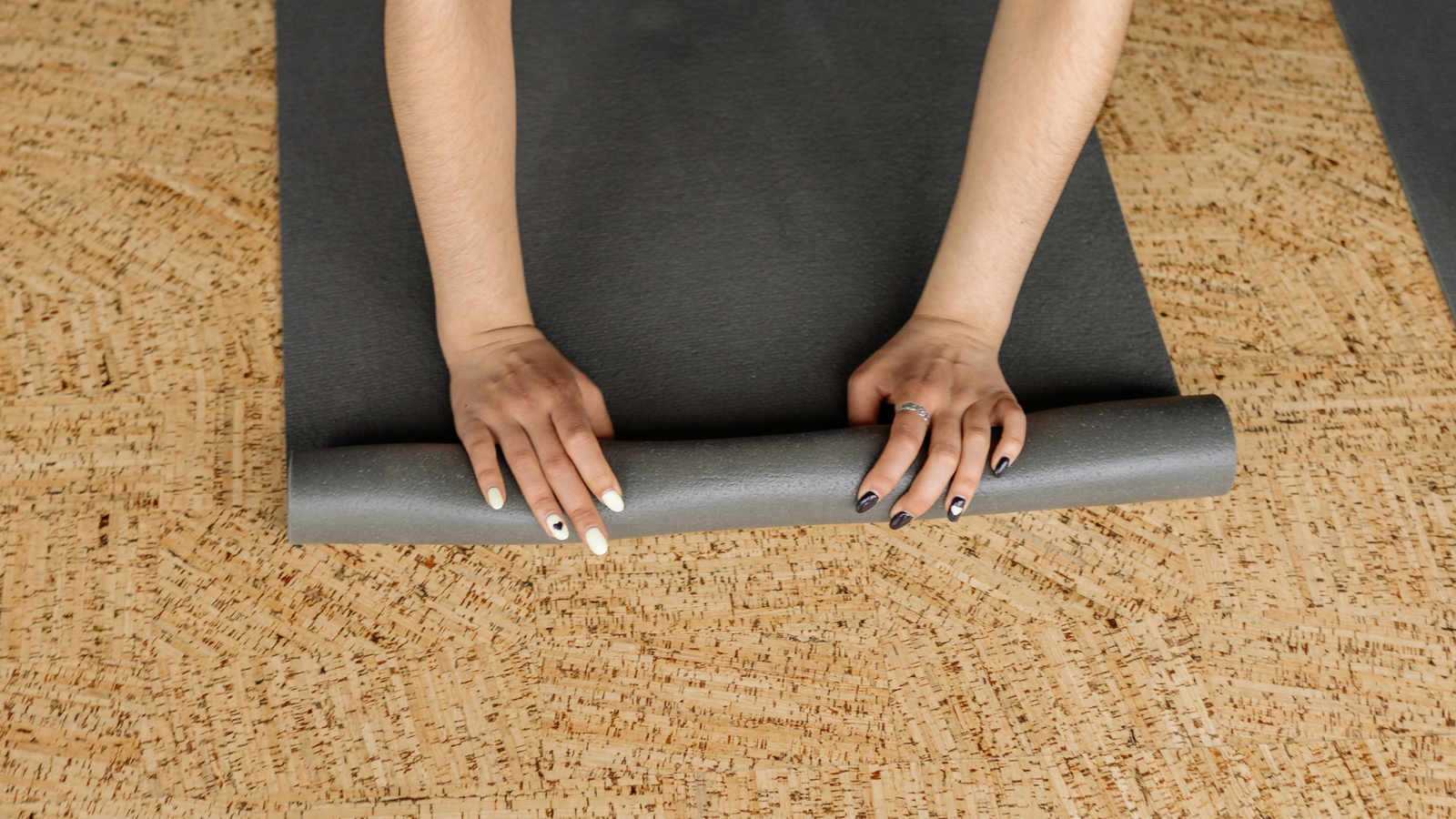
Earthing mats are one of the most common indoor grounding tools, but they are also one of the most misunderstood. People often ask whether they are really connected to the Earth or just plugged into electricity, and how a thin mat on the floor or bed could possibly do anything at all.
The answer is simpler than it looks, but it helps to understand a few basics about grounding, household wiring, and electrical safety.

The Basic Idea Behind An Earthing Mat
An earthing mat is made from a conductive material. This might be carbon infused rubber, conductive carbon fiber, or a similar surface designed to allow electrons to move freely across it.
When your skin touches the mat, your body becomes electrically connected to that conductive surface. The mat itself is then connected to the Earth through a grounding path.
That grounding path is what matters most.

The Role Of The Ground Connection
An earthing mat does not work on its own. It only functions if it is connected to a true ground.
There are two common ways this is done:
- Through the grounding port of a properly wired wall outlet
- Through a grounding rod placed directly into the soil outdoors
In both cases, the goal is the same. The mat provides a low-resistance path between your body and the Earth’s electrical potential.
This does not involve electricity flowing into you. It involves equalizing small charge differences between your body and the ground.
How Grounded Wall Outlets Actually Work
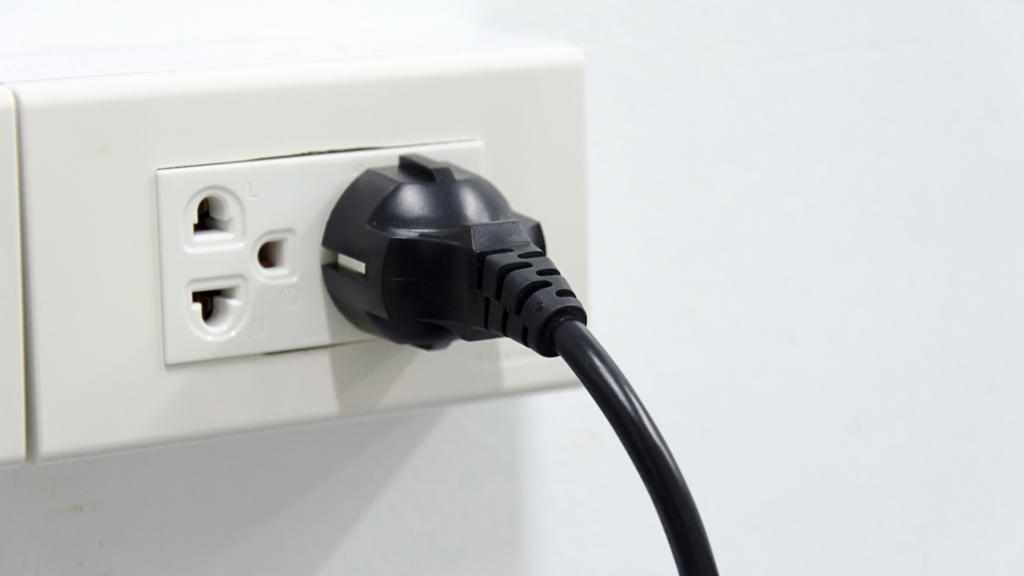
In many homes, wall outlets have three holes. The round hole is the ground.
That ground wire is physically connected to the Earth through a grounding rod or grounding system installed when the building was constructed. Its purpose is safety. It allows excess electrical charge to flow safely into the Earth in the event of a fault.
When an earthing mat is plugged into the ground port only, with no connection to the live or neutral wires, it uses that same safety pathway.
Important points to understand:
- The mat does not draw power
- No current is supplied to the mat
- The connection is passive, not active
If the outlet is wired correctly, the mat is effectively connected to the Earth outside the building.
Why Outlet Testing Matters
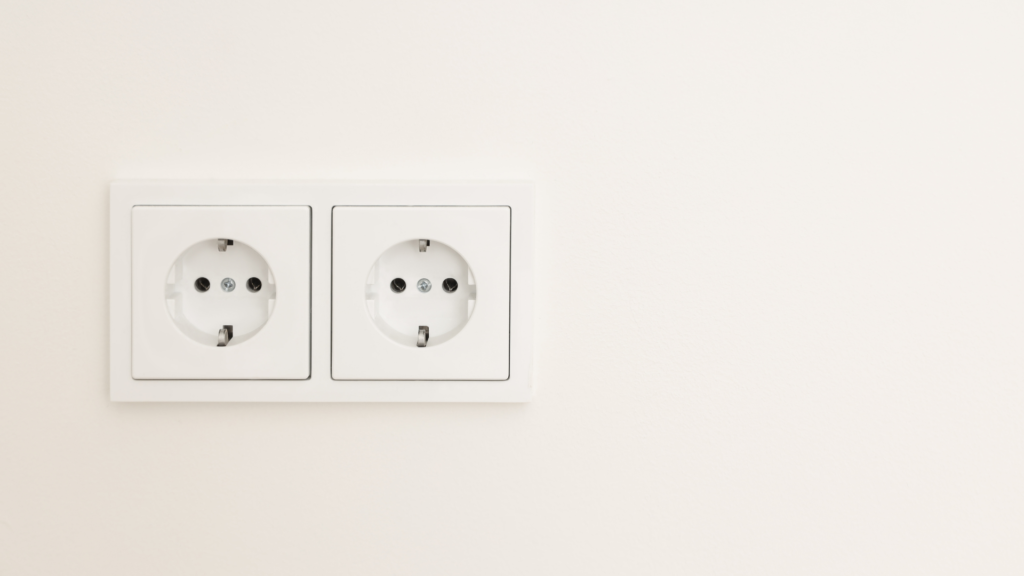
Not all outlets are properly grounded, especially in older buildings or regions with different electrical standards.
An outlet tester can quickly confirm whether the ground port is functional. Without a real ground connection, the mat cannot do what it is designed to do.
Using a mat without verifying grounding does not usually pose a danger, but it may mean the mat is not actually grounding you.

How Grounding Rods Work With Mats
Some people prefer to avoid wall outlets entirely and use a grounding rod.
A grounding rod is a metal stake placed directly into the soil outside. The earthing mat connects to this rod via a wire.
This creates a direct physical connection between the mat and the Earth, independent of household wiring.
Grounding rods can be especially useful in situations where outlet grounding is unreliable or unavailable.

What Happens When You Touch The Mat
When your skin contacts the mat, your body and the mat share the same electrical potential. If your body carries excess static or a different charge relative to the Earth, that difference can dissipate through the grounding connection.
This is similar to how static electricity discharges when you touch a metal object connected to the ground, but on a much smaller and gentler scale.
There is no sensation for most people. Grounding is usually silent and subtle.

Why You Do Not Feel Electricity
A common fear is that plugging something into the wall must involve electricity.
In this case, the grounding connection is not delivering power. It is the same ground connection used for electrical safety in appliances with metal casings.
Because there is no voltage difference driving current through your body, there is nothing to feel.
If you ever feel tingling or discomfort, that suggests a setup issue rather than proper grounding.

Why Contact Area And Time Matter
Earthing mats work through skin contact. A larger contact area can make the connection more consistent.
This is why mats are often used:
- Under bare feet at a desk
- On the floor while sitting
- On a bed during sleep
Time also matters. Because the process is subtle, people who notice effects often use mats for extended periods rather than short sessions.

What Earthing Mats Can And Cannot Do
Earthing mats are not medical devices. They do not push energy into the body or force biological changes.
What they do is provide a physical connection to the Earth’s electrical reference point. Any downstream effects depend on how the body responds to that connection, which can vary from person to person.
They are best understood as a tool for recreating a natural condition that modern indoor life largely removes.

A Simple Way To Think About It
If you imagine your body as electrically floating while indoors, an earthing mat is like gently placing it back on the ground.
Nothing dramatic happens. There is no switch flipping. The connection is quiet and passive.
Whether that connection matters for you personally is something only careful observation over time can answer.
Understanding how earthing mats connect you to the ground does not require belief. It just requires knowing where the wire goes and what it is connected to.