





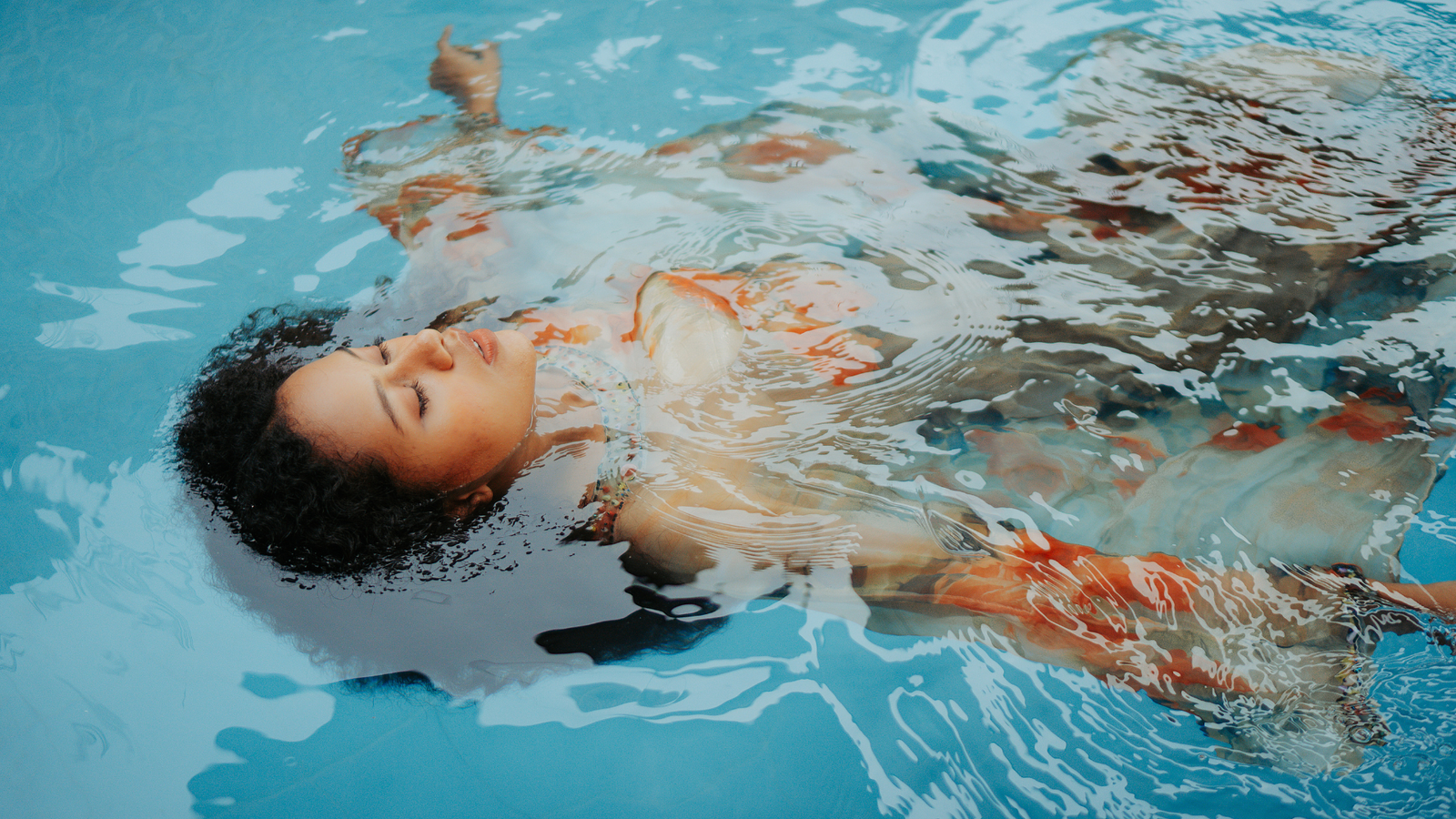
Water feels like one of the most natural places to ground. Standing in the ocean, wading into a lake, or even standing barefoot in the shower often gives people a strong sense of calm and connection. That leads to a common question: does grounding in water actually work, or does it just feel good?
The short answer is that grounding in natural bodies of water is generally considered effective, while grounding in a shower is more complicated. The details matter.

Why Water Is Often Linked To Grounding
From a basic physics perspective, water can conduct electricity, especially when it contains dissolved minerals. Natural water sources like oceans, lakes, and rivers are not pure H₂O. They contain salts and minerals that increase conductivity.
When your body is in direct contact with conductive water that is itself in contact with the Earth, electrical potential can equalize between your body and the ground. This is the same principle often cited in earthing research and theory.
That does not mean strong currents are flowing through you. It means small charge differences may dissipate.

Grounding In The Ocean
The ocean is often described as the most effective natural grounding environment.
Saltwater is highly conductive, and the ocean is directly connected to the Earth on a massive scale. When you stand, swim, or float in the sea, your entire body is in contact with conductive water that is grounded.
Many people report feeling deeply relaxed after ocean time. While that feeling can also come from movement, sunlight, and rhythm of waves, the electrical conductivity of saltwater makes ocean grounding physically plausible.
Key points to keep in mind:
- Saltwater conducts electricity very well
- Full body contact increases exposure
- Environmental factors like sunlight and movement also play a role
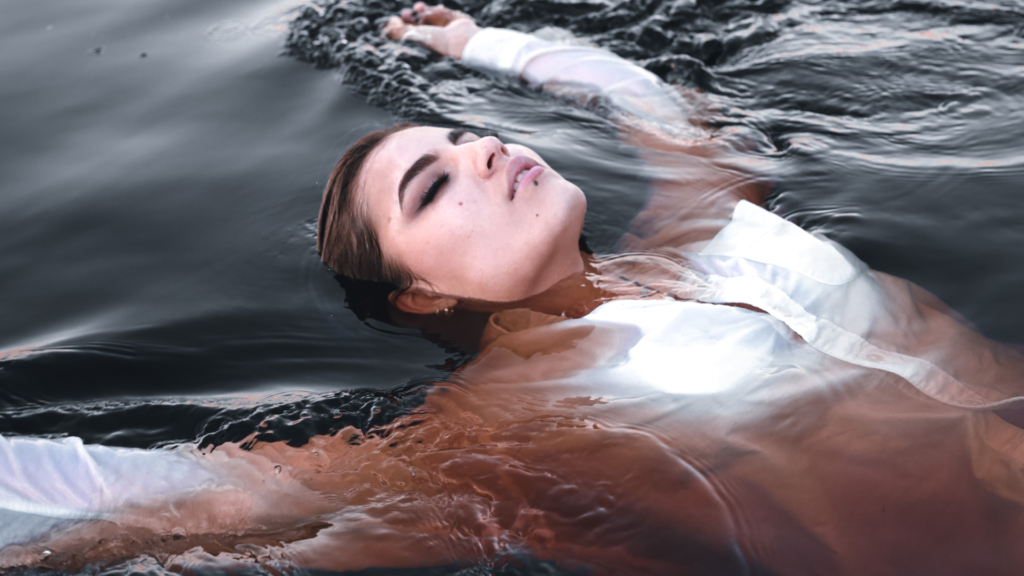
Grounding In Lakes, Rivers, And Freshwater
Freshwater contains fewer dissolved salts than seawater, but it is still conductive due to minerals and organic material.
Grounding in lakes or rivers is generally considered effective, especially when:
- You are standing on a natural bottom like sand, soil, or rock
- The water is not isolated from the surrounding earth
- There is direct skin contact with the water
Freshwater grounding may be less conductive than ocean grounding, but it still allows for electrical connection with the Earth.
From a practical perspective, many people feel similar calming or restorative effects in lakes as they do in the ocean.

What About Grounding In The Shower?
This is where things get less clear.
A shower involves water, but several factors affect whether grounding actually happens:
- The water source may come through insulated pipes
- Plumbing materials vary by building and region
- Floors may be tiled, sealed, or insulated
- The drain connection may or may not provide a true ground path
In many modern buildings, water pipes are no longer reliably grounded to the Earth. Plastic piping is common, and even metal systems may be electrically isolated for safety.
Because of this, standing barefoot in the shower does not reliably ground you in the same way as standing in natural water outdoors.
Some people still report feeling relaxed in the shower, but that is likely due to warmth, muscle relaxation, and sensory comfort rather than grounding itself.

Why Showers Feel Grounding Even If They Are Not
Warm water stimulates the parasympathetic nervous system. It relaxes muscles, slows breathing, and reduces stress. That can feel very similar to what people describe after earthing.
This overlap makes showers psychologically grounding, even if the electrical connection to the Earth is weak or absent.
Feeling grounded and being electrically grounded are not always the same thing.

Does Swimming Or Floating Change Anything?
Movement does not stop grounding. If the water is conductive and connected to the Earth, swimming or floating still allows contact.
In fact, floating can increase skin surface contact with water. This may be one reason people describe strong restorative effects after time in natural water.
Again, this does not prove a specific biological mechanism, but it aligns with the physical idea of contact and conductivity.

Practical Takeaways
If you are curious about grounding in water, these guidelines can help:
- Ocean grounding is the most conductive and reliable
- Lakes and rivers can also provide grounding, especially with natural bottoms
- Showers are inconsistent and should not be relied on for grounding
- Relaxation does not automatically mean that electrical grounding is occurring

A Balanced Way To Think About Water Grounding
Natural water environments combine many elements that support well-being. Movement, temperature, light, sound, and reduced mental load all matter. Electrical grounding may be one layer among several.
It is reasonable to say that grounding in the ocean or a lake is physically plausible and widely experienced as calming. It is also reasonable to say that showers mostly provide relaxation rather than true earthing.
If being in natural water makes you feel better, that result stands on its own. The goal does not have to be proving a mechanism. Sometimes the simplest test is how you feel over time, not what label you give the experience.